
- A no-vig calculator removes the sportsbook's built-in margin so you can see the fair win probability behind a League of Legends line.
- The fastest manual method is to convert each side to implied probability, add the probabilities together, then divide each side by the total.
- Use no-vig probability as a baseline, then compare it with Polymarket odds, team form, patch context, and the best available sportsbook price.
A no-vig calculator is one of the few betting tools that immediately makes you less sloppy. It strips out the bookmaker's margin, turns a messy sportsbook line into a fair probability, and gives you a clean number to compare against your own read of a League of Legends match.
That matters because a sportsbook line is not a neutral forecast. If T1 is priced at 1.55 and Gen.G is priced at 2.45, the two implied probabilities do not add up to 100 percent. They add up to more than 100 percent because the book has built a margin into the market. If you compare those raw prices without removing the margin, you are comparing a shaded number against your model.
We built RiftOdds around the idea that esports bettors should think in probabilities first. The RiftOdds betting tools help you convert prices, sanity-check implied probability, and compare the market before you stake. This guide shows the no-vig maths behind that workflow, using LoL examples rather than generic football or horse racing numbers.
What a no-vig calculator actually does
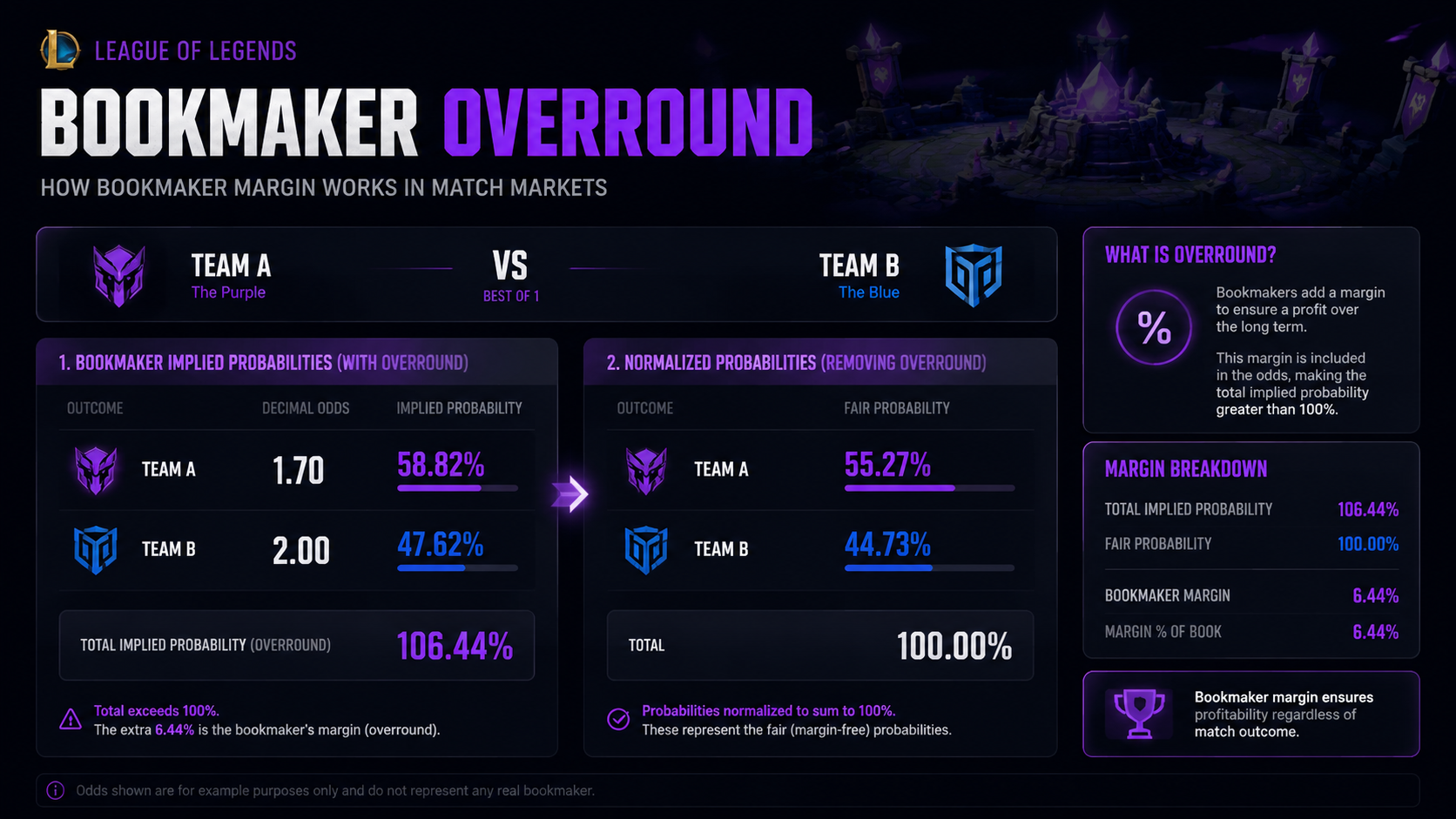
A no-vig calculator removes the bookmaker's overround from a set of odds. The result is a pair of fair probabilities: what the market would imply if the sportsbook took no built-in edge.
In a two-outcome match market, the book might imply Team A has a 64 percent chance and Team B has a 43 percent chance. That totals 107 percent. The extra 7 percent is the market margin. A no-vig calculation rescales both sides so they add up to 100 percent again. Team A might become 59.8 percent fair probability and Team B might become 40.2 percent.
That does not mean the no-vig number is automatically "true." It means the bookmaker margin has been removed, which gives you a cleaner baseline. You still need to ask whether your own read is better than the market. For that part, use team form, patch state, side selection, roster news, and current market movement.
If you are new to the underlying formats, start with our guide to League of Legends betting odds explained. Once decimal, American, and probability prices make sense, no-vig calculation becomes a simple clean-up step.
The no-vig formula, step by step
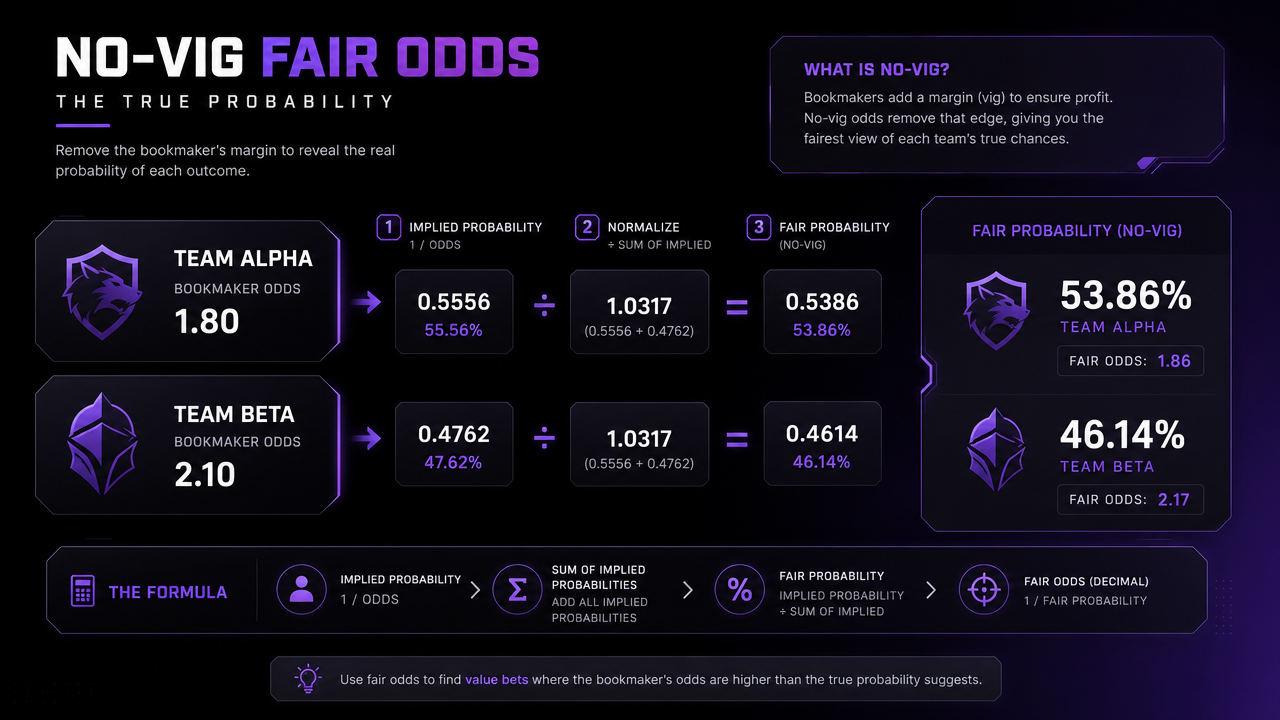
The no-vig formula is easier than it looks. You only need three moves:
- Convert each outcome into implied probability. Decimal odds use 1 divided by the decimal price. American odds need the usual plus/minus conversion.
- Add the probabilities together. This gives you the total market percentage, including the bookmaker margin.
- Divide each outcome's implied probability by the total. The result is the no-vig, or fair, probability.
Formula:
No-vig probability = raw implied probability / total implied probability
Here is the same thing with numbers. Suppose one sportsbook posts a League of Legends best-of-five like this:
| Team | Decimal odds | Raw implied probability | No-vig probability |
|---|---|---|---|
| Favourite | 1.55 | 64.52% | 59.98% |
| Underdog | 2.35 | 42.55% | 40.02% |
The raw probabilities total 107.07 percent. Divide each side by 107.07 and the fair market becomes roughly 60/40. If your own matchup work says the underdog is closer to 45 percent, you may have something worth investigating. If you only make them 36 percent, the line is probably still too short even after the margin is removed.
A League of Legends example: finding the fair price
LoL is a good no-vig sport because prices move for reasons that fans can actually understand. Patch changes, draft priority, side selection, champion pools, lane matchups, substitution news, and best-of format all matter. A raw sportsbook line hides those opinions behind margin. A no-vig line makes the baseline clearer.
Imagine an LCK playoff series. The favourite is clearly stronger across the split, but the underdog has better dragon setup, a bot lane that survives losing matchups, and a mid laner with comfort picks on the current patch. The sportsbook makes the favourite 1.55 and the dog 2.35. After removing the vig, the fair baseline is about 60/40.
Now you can reason properly. If you think the favourite wins 65 percent of the time, the favourite is still interesting. If you think the favourite wins 58 percent, the book has shaded them too low for you and the underdog might be the better side. If your number is almost exactly 60/40, there is no edge. Passing is a position too.
The mistake beginners make is stopping at "the favourite is probably better." That is not enough. A favourite can be better and still be a bad bet if the market has overpaid for them. No-vig pricing forces the question that matters: is my true probability higher than the fair market probability?
How to compare no-vig odds with Polymarket
Polymarket odds are useful because the price already reads as a probability. A market trading at 0.42 is saying roughly 42 percent. You do not need to convert decimal odds, and you do not need to strip a traditional sportsbook overround in the same way. The Yes and No sides tend to behave like probabilities around 100 percent, though real order books still have bid-ask spread and liquidity constraints.
That makes Polymarket a strong comparison point after a no-vig calculation. If a sportsbook's no-vig baseline says a team is 40 percent, and a liquid Polymarket sports market is trading the same outcome around 47 percent, you have a meaningful disagreement to inspect. The market may know something, the sportsbook may be slow, or the two markets may be pricing slightly different resolution rules.
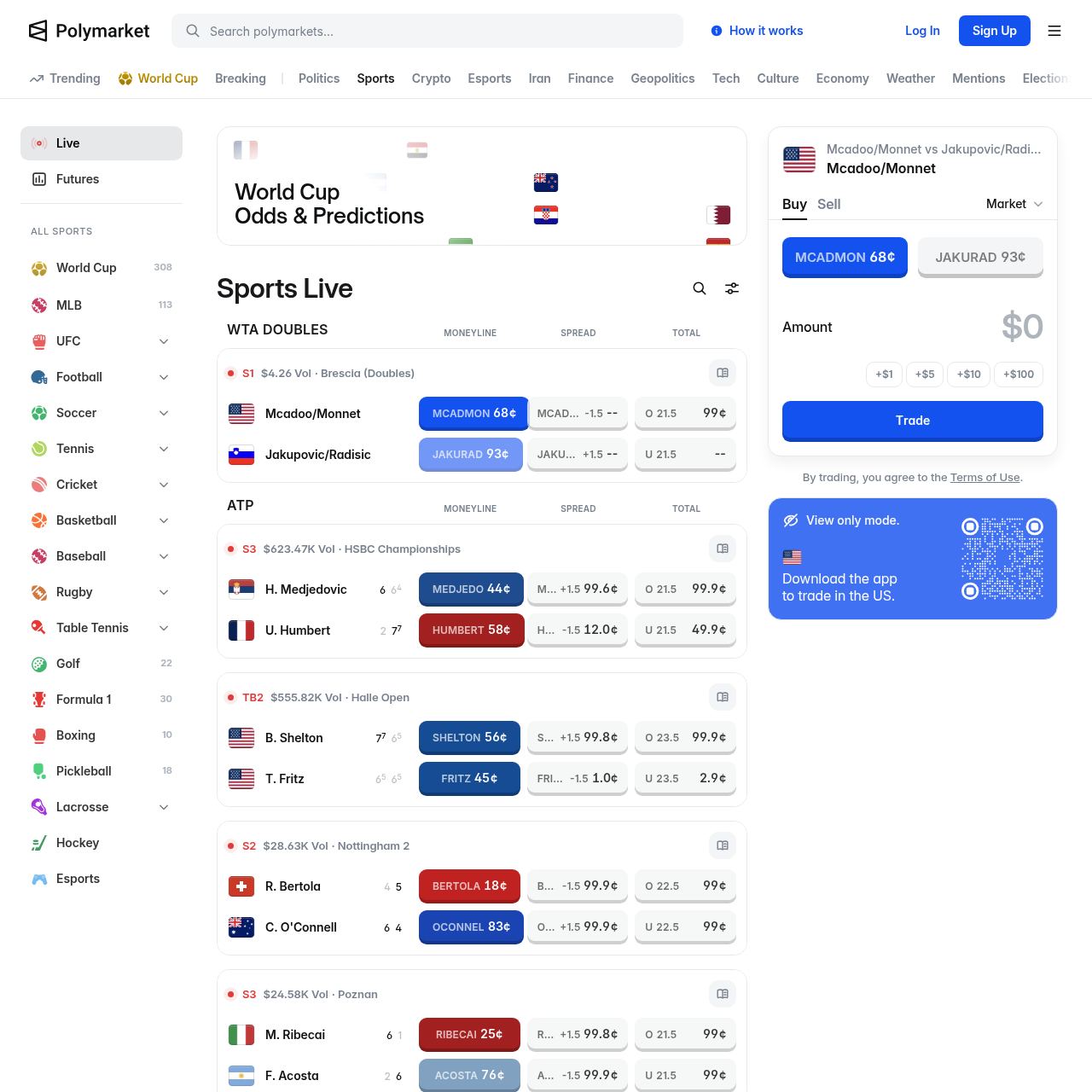
Use our RiftOdds picks board as the practical bridge. Start with the no-vig fair price, then compare it with Polymarket odds, current team news, and the match schedule. If you want the longer primer, our guide on how to use Polymarket explains share prices, resolution, and exits in plain terms.
Where sportsbook comparison fits
A no-vig calculator does not tell you where to bet. It tells you the fair price. After that, you still need to compare what is actually available to you, in your location, from legal operators you are allowed to use.
For esports bettors, that comparison stage usually means checking a few specialist or crypto-friendly betting sites alongside prediction markets. On RiftOdds we keep affiliate redirects tidy so links are readable and trackable: Thunderpick, Vave, BC.Game, Stake, and EsportsBet. Availability, restrictions, and market depth vary, so treat them as places to compare prices rather than automatic recommendations.
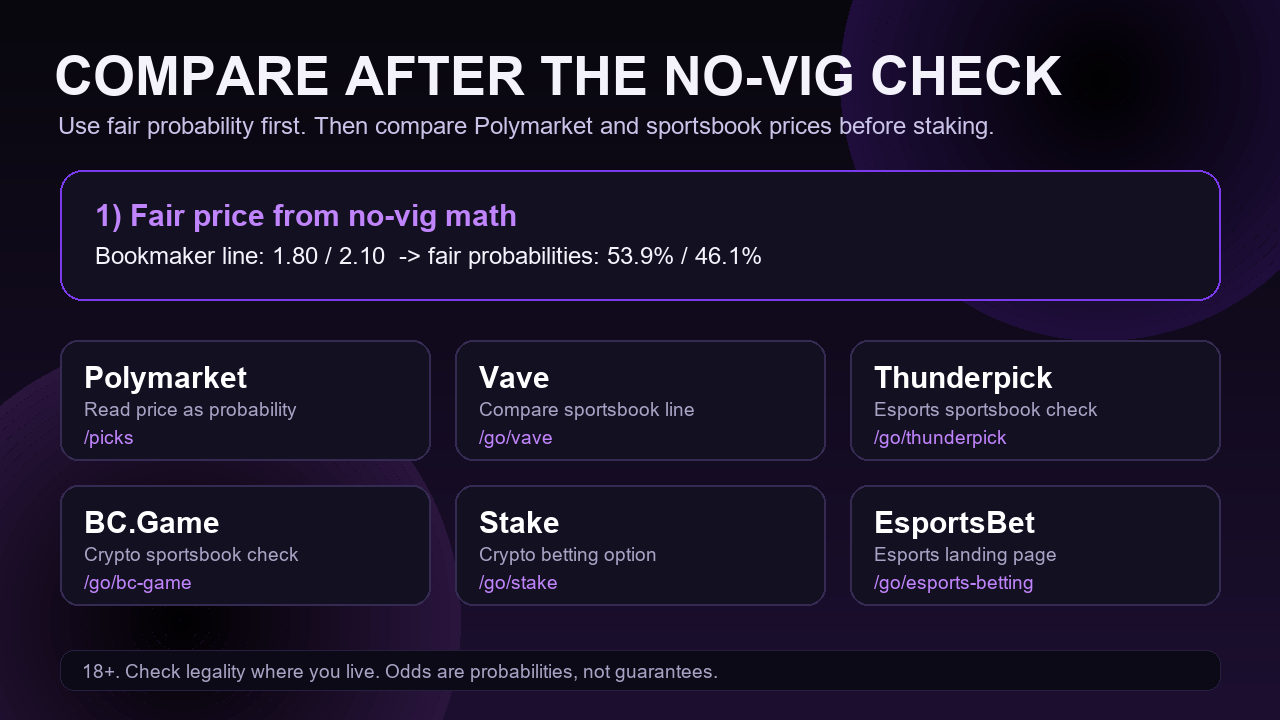
Here is the practical sequence we use:
- Convert the sportsbook line to implied probability.
- Remove the vig to find the fair market baseline.
- Compare that baseline with Polymarket odds or other market prices.
- Check whether the resolution rules and match market are genuinely the same.
- Only stake if your edge survives the comparison and your bankroll rules allow it.
This keeps affiliate links in their proper place. They are options for line shopping, not a substitute for analysis. A site can offer a bonus and still have a bad price on the match you care about. The calculator comes before the click.
Why this keyword is worth targeting
The search intent behind "no-vig calculator" is unusually clean. People are not looking for a news recap or a vague strategy post. They want to remove bookmaker margin and make a decision. That is exactly the kind of utility content that can bring users back repeatedly, especially if the article connects to a live tool instead of ending at a formula.

That is the gap we can own. Generic calculators explain the maths. RiftOdds can explain the maths through League of Legends, then connect the result to LoL schedules, Worlds odds, Polymarket movement, and betting-site comparison. That builds topical authority without cannibalising the existing how to bet on League of Legends guide or the broader odds explainer.
Common no-vig mistakes that make the number useless
The maths is simple, but the workflow still has traps. These are the ones that cost bettors the most.
- Mixing different markets. Do not compare a best-of-five series winner against a tournament outright, or a map handicap against a moneyline. The no-vig number only works when the market is the same.
- Ignoring bid-ask spread. Prediction-market mid prices can look cleaner than the price you can actually trade. Check the buy and sell prices, not only the displayed midpoint.
- Calling every gap an edge. A 2-point difference may disappear after fees, timing, liquidity, and normal model error. Bigger gaps deserve attention; tiny gaps deserve caution.
- Forgetting team news. A no-vig price from three hours ago can be stale after roster news, illness rumours, or a patch read changes.
- Overstaking because the math feels clean. Fair probability is not certainty. A 60 percent team still loses four times out of ten.
- Using one book as the whole market. The sharper comparison is across multiple books, exchanges, and prediction markets.
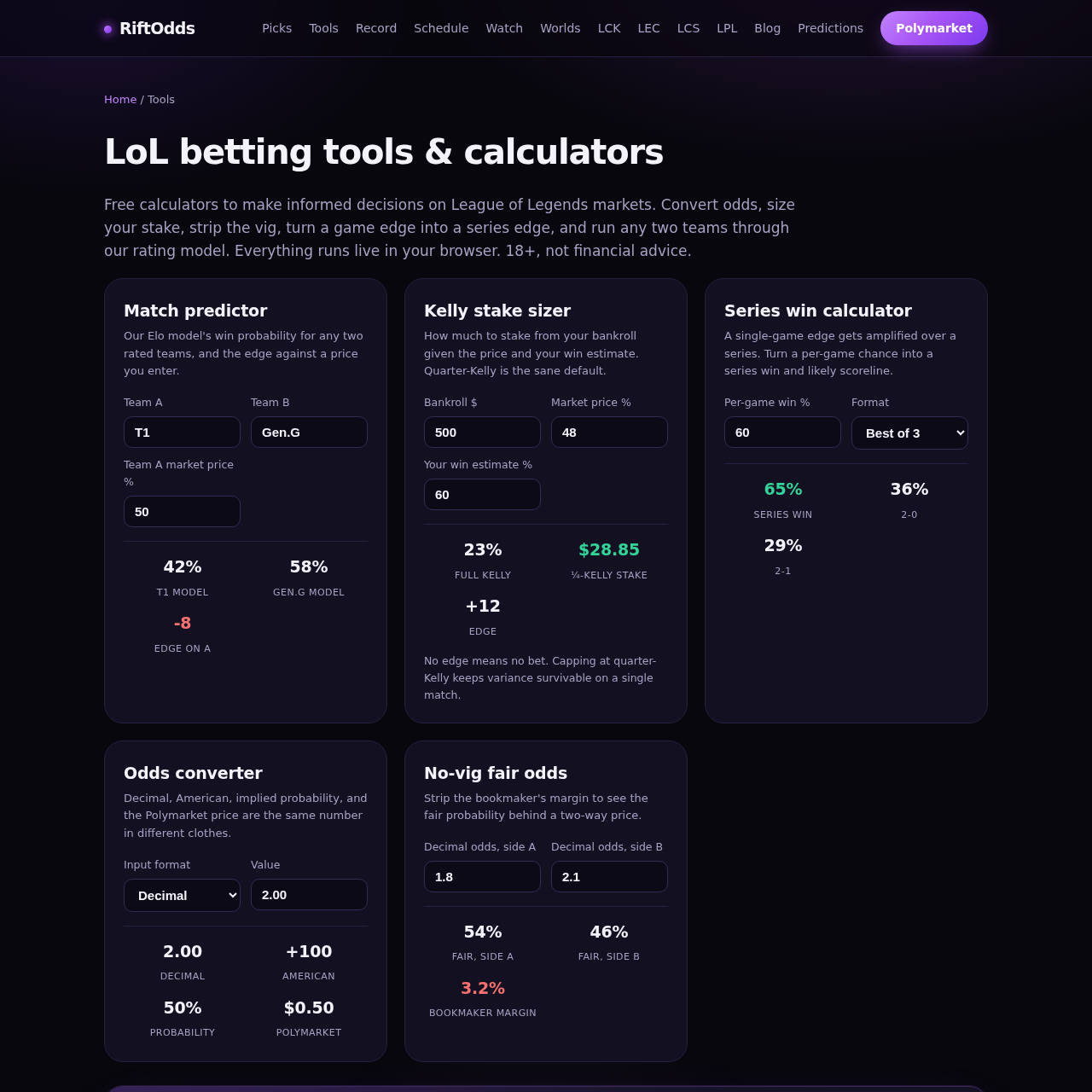
For a deeper staking framework, use the calculators on RiftOdds tools after you have found a real price discrepancy. Fair odds help you identify a candidate; expected value and bankroll rules decide whether it is worth acting on.
Responsible betting note
No-vig calculation can make your analysis sharper, but it cannot make betting safe money. Esports outcomes are volatile, and even strong reads lose. Only bet if it is legal where you live, only if you are of legal age, and only with money you can afford to lose. If betting starts to feel like a way to fix a financial problem, stop and get support.
Frequently asked questions
What is a no-vig calculator?
A no-vig calculator removes the bookmaker's margin from betting odds and shows the fair probability for each outcome. In a two-outcome esports market, it converts the raw implied probabilities, adds them together, then rescales both sides so they total 100 percent.
How do you calculate no-vig odds?
Convert each outcome to implied probability, add all implied probabilities together, then divide each outcome by that total. For example, if two sides imply 64.52 percent and 42.55 percent, the total is 107.07 percent. Dividing each side by 107.07 gives fair probabilities of roughly 59.98 percent and 40.02 percent.
Why do sportsbook probabilities add up to more than 100 percent?
They add up to more than 100 percent because the sportsbook includes margin, also called vig or overround. That extra percentage is the book's built-in edge. A no-vig calculator removes that margin so you can compare the market on a fair-probability basis.
Does no-vig work for League of Legends betting?
Yes. No-vig calculation works well for League of Legends match winners, series winners, map winners, and other clean two-outcome markets. It is less useful if you compare different market types or if the market is illiquid, stale, or built around unclear resolution rules.
Is Polymarket no-vig?
Polymarket is not a traditional sportsbook, so it does not quote odds with a bookmaker overround in the same way. Its prices are prediction-market share prices that read directly as probabilities. You still need to consider bid-ask spread, liquidity, fees, and whether the market rules match the sportsbook market you are comparing.
Which line should I compare after calculating fair odds?
Compare the no-vig fair probability with the actual price you can bet or trade right now. That can be a sportsbook line, a Polymarket share price, or another legal betting site available in your location. Use the same event and same market type, then act only if the price is clearly better than your fair number.